Engineered Wood Flooring · TW13–TW14Engineered Wood Flooring in
Engineered Wood Flooring in
Feltham.
Free home visit · Fixed price · Uplift & disposal included
Free home visit · Fixed price · Uplift & disposal included
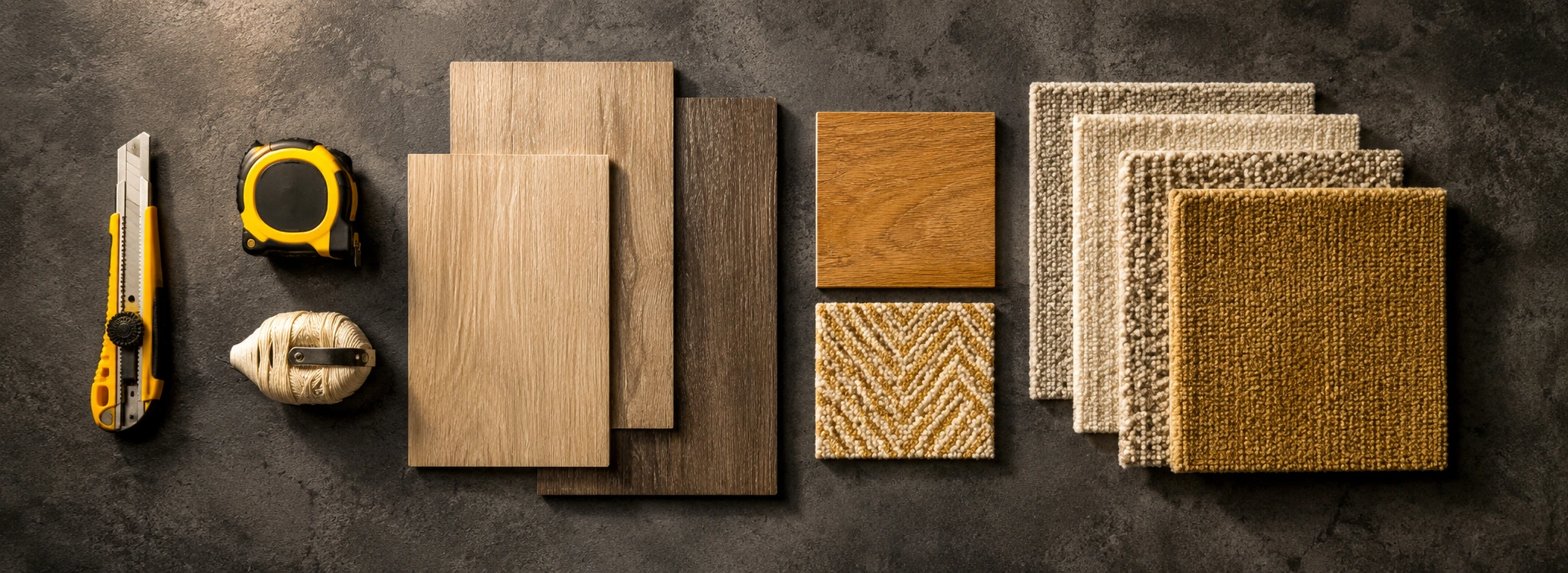
Floors & Fix supplies and fits engineered wood flooring in Feltham (TW13 and TW14). Engineered wood is the premium hard-floor option for Feltham's older semis and family houses — a real wood surface with a stable core that handles the subfloor moisture variations common in this area. Free home visit, fixed price, written guarantee.
Feltham is a west-London suburb shaped by 1930s–1960s housing development, with solid-concrete ground floors dominant in the large post-war estates off Feltham High Street and Hounslow Road. Interwar semis on streets like Shakespeare Avenue and Browning Avenue retain suspended timber construction. Proximity to Heathrow drives a transient rental market alongside long-established family homeownership, creating high demand for hard-wearing, easy-clean flooring on both ground and upper floors.
62% of homes in the Feltham North and Feltham West wards are owner-occupied or privately rented houses rather than flats, with semi-detached dwellings forming the largest single property type — ONS Census 2021 — Housing, England and Wales
Engineered wood is increasingly popular in Feltham's owner-occupied interwar semis where homeowners want a high-quality finish with long-term durability. The multi-ply core of engineered boards tolerates the moisture fluctuations that affect both the suspended-timber ground floors of streets like Shakespeare Avenue and the solid-concrete slabs of post-war estate properties — moisture that would cause solid wood to cup or gap. On suspended timber floors we assess board rigidity before recommending floating or secret-nail installation; ply is fitted where boards flex. On concrete ground floors we moisture-test and apply damp suppression before bonding or floating the engineered boards. All engineered wood we supply requires a minimum 48-hour acclimatisation period in the room before fitting begins — we explain this process at the home visit and factor it into the installation schedule.
Streets like Shakespeare Avenue, Browning Avenue and Kilross Road were developed in the 1930s as owner-occupier semis with typical period layouts: two reception rooms, three bedrooms and a rear kitchen. Suspended timber ground floors are standard in this cohort. Boards are usually sound but benefit from a ply overlay before LVT to remove minor flex — a step that also protects the adhesive bond over time.
Secret-nailing engineered wood onto a ply-rafted suspended timber floor is the classic installation method for period properties — it looks and feels exactly as the original builder intended. We ply-raft first to remove joist-span flex, then secret-nail through the tongue of each board into the ply, producing a solid, creak-free floor that moves with the building rather than fighting it. Ply preparation and secret-nail fitting are both included in your fixed price.
The large post-war estates between Hounslow Road and the A316 — including sections of the Browells Lane area and properties along Hanworth Road — were built on solid-concrete slab, often with a thin sand-cement screed finish. These floors are flat but can carry residual damp in lower-ground rooms. A moisture reading is standard before any LVT or engineered wood fitting in this housing era.
Engineered wood has a real timber wear layer that responds to moisture — on persistently damp concrete it will cup, swell, and lose adhesion over time. Moisture must be within ≤75% RH before we will specify any wood product. We test at the home visit and advise honestly: where moisture is persistently elevated, LVT delivers a comparable visual result without the risk. We will not fit engineered wood on a subfloor that will damage it.
Infill development during the 1970s and 1980s along the Feltham High Street corridor and near Feltham station produced a mix of screed-finished ground floors and some continued solid-concrete construction. Properties on Garnett Close and the Longford Estate roads are typical of this period. Screed quality varies; grinding down or feather-skim topping may be needed before fitting.
Liquid screed provides a rigid, resonance-free base that is ideal for glue-down engineered wood — particularly wide-board products that need full support across their width. We prime the screed, apply specialist wood-floor adhesive, and lay each board in staggered bond for structural integrity. The result is a floor with no movement, no hollow spots, and a natural wood finish that will last for decades.
The regeneration of Feltham town centre has delivered a series of medium-density apartment blocks around the station and the Ariel Way development. These properties use modern screed over concrete slab, sometimes with electric underfloor heating in the slab. LVT specified for UFH compatibility is the standard fitting choice here; click-float systems are used where UFH is absent.
Engineered wood over underfloor heating requires glue-down installation — floating is not recommended as thermal cycling can cause floating boards to bow. Surface temperature must not exceed 27°C and the adhesive must be UFH-compatible (a flexible, heat-stable formulation). We only specify boards that are manufacturer-approved for UFH use, and UFH compatibility is confirmed in writing on every quote so you, your heating engineer, and the product warranty are all aligned.
Yes — engineered wood is well suited to concrete ground floors in Feltham's post-war properties provided the concrete is sufficiently dry. We test moisture before fitting; where readings are elevated we apply a damp-suppression primer. The multi-ply core of engineered boards resists moisture movement that would damage solid wood.
Engineered wood pricing depends on species, board width, finish and room area. We give a fixed all-in price at a free home visit in TW13 or TW14 covering the boards, sub-floor preparation, fitting and door trimming. We bring a full sample range to the visit.
A single living room takes approximately four to six hours. Whole ground-floor installs across two or three rooms are typically completed in one to two days depending on sub-floor condition. Acclimatisation time before fitting is factored into the schedule from the start.
Engineered wood offers a real wood surface that can be lightly sanded and refinished if needed, whereas laminate cannot. It also performs better over suspended timber floors subject to seasonal movement. Laminate is a valid lower-cost alternative; we explain the differences at the home visit and let you decide.
Yes. For upper-floor flats in Feltham we specify an engineered wood product with an underlay that meets the impact sound requirements set out in building regulations and most lease agreements. We advise on the correct specification at the home visit.
We come to you with samples, measure up and give you a fixed price on the day. No obligation, no deposit. See our engineered wood flooring service or all flooring options in Feltham.
Last updated: May 2026