Engineered Wood Flooring · HA1–HA3Engineered Wood Flooring in
Engineered Wood Flooring in
Harrow.
Free home visit · Fixed price · Uplift & disposal included
Free home visit · Fixed price · Uplift & disposal included
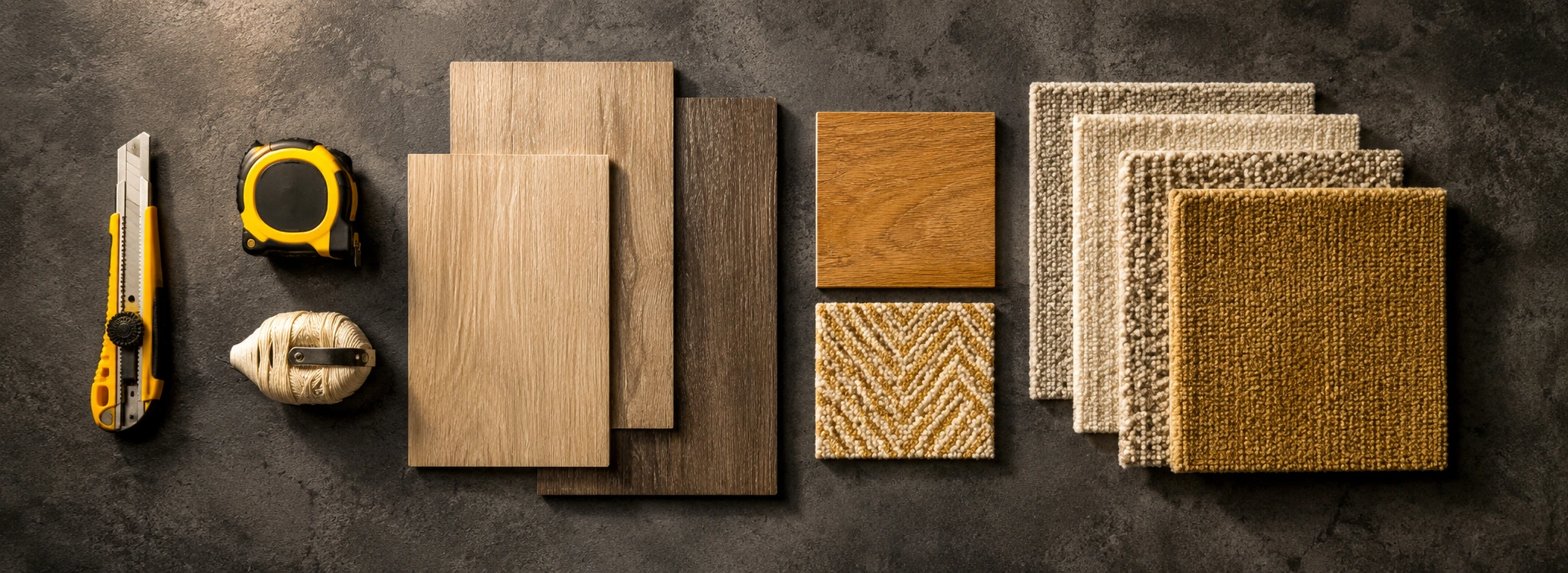
Floors & Fix fits engineered wood throughout Harrow's HA1–HA3 postcodes. The Edwardian semis in Harrow-on-the-Hill and South Harrow with suspended timber ground floors are excellent candidates for secret-nailed engineered oak. Kenton and Wealdstone's 1930s semis are similarly well-suited. HA1 new builds with wet UFH take glue-down engineered wood.
Harrow has a diverse housing stock centred on Edwardian semis in Harrow-on-the-Hill and South Harrow (HA1–HA2) with suspended timber ground floors, substantial 1930s semi-detached housing in Kenton and Wealdstone (HA3), post-war council housing in Roxborough with solid concrete, and newer apartment developments in HA1 and the Wembley area with underfloor heating.
66% of Harrow's housing stock predates 1970, with a significant proportion of Edwardian and 1930s construction carrying suspended timber ground floors across HA1–HA3. — ONS Census 2021, housing stock age, London Borough of Harrow
Engineered wood is an excellent choice for Harrow's older housing stock. Edwardian semis in HA1 and HA2 have suspended timber ground floors — once ply-rafted, ideal for secret-nailed engineered oak in a 150–180mm board that suits the generous Edwardian room proportions. The 1930s semis in Kenton (HA3) with suspended timber ground floors are similarly well-suited to secret-nailed or floating engineered oak in a 140–160mm board. For Roxborough's post-war concrete housing, moisture testing determines whether glue-down engineered wood is appropriate — elevated readings point to LVT as the safer recommendation. HA1 St Ann's Road and Wembley area new builds with wet UFH take glue-down engineered oak rated to 27°C surface temperature.
The Edwardian semis in Harrow-on-the-Hill and South Harrow (HA1–HA2) have suspended timber ground floors in generally good condition — medium moisture risk given the elevated location. These larger Edwardian properties have generous room proportions and suit wider-board floor products.
Secret-nailing engineered wood onto a ply-rafted suspended timber floor is the classic installation method for period properties — it looks and feels exactly as the original builder intended. We ply-raft first to remove joist-span flex, then secret-nail through the tongue of each board into the ply, producing a solid, creak-free floor that moves with the building rather than fighting it. Ply preparation and secret-nail fitting are both included in your fixed price.
The 1930s semis in Kenton and Wealdstone (HA3) have suspended timber or mixed ground floors in generally good condition. Lower moisture risk than Harrow's post-war stock and well-suited to most floor types once the ground floor is appropriately prepared.
Secret-nailing engineered wood onto a ply-rafted suspended timber floor is the classic installation method for period properties — it looks and feels exactly as the original builder intended. We ply-raft first to remove joist-span flex, then secret-nail through the tongue of each board into the ply, producing a solid, creak-free floor that moves with the building rather than fighting it. Ply preparation and secret-nail fitting are both included in your fixed price.
Post-war local-authority housing in the Roxborough area of HA1 and parts of Northolt Road has solid concrete ground floors with elevated moisture readings typical of properties built in the 1950s with early DPC membranes. Assessment before installation is essential.
Engineered wood has a real timber wear layer that responds to moisture — on persistently damp concrete it will cup, swell, and lose adhesion over time. Moisture must be within ≤75% RH before we will specify any wood product. We test at the home visit and advise honestly: where moisture is persistently elevated, LVT delivers a comparable visual result without the risk. We will not fit engineered wood on a subfloor that will damage it.
New-build apartments in the HA1 St Ann's Road regeneration area and the wider Wembley HA9 development corridor have liquid-screed floors with wet underfloor heating. These are flat, clean substrates for LVT and engineered wood provided UFH-rated products are specified.
Engineered wood over underfloor heating requires glue-down installation — floating is not recommended as thermal cycling can cause floating boards to bow. Surface temperature must not exceed 27°C and the adhesive must be UFH-compatible (a flexible, heat-stable formulation). We only specify boards that are manufacturer-approved for UFH use, and UFH compatibility is confirmed in writing on every quote so you, your heating engineer, and the product warranty are all aligned.
A 150–180mm board is proportionate in the generous Edwardian rooms of HA1 and HA2 — wide enough to look deliberate and in keeping with the ceiling heights. European oak in an oiled finish is the most sympathetic choice.
Yes — the suspended timber ground floor in a Kenton 1930s semi is ideal for secret-nailed engineered oak once ply-rafted. A 140–160mm board in an oiled finish suits the proportions of these rooms well.
Potentially — we test the concrete ground floor moisture at the home visit. If the slab is ≤75% RH, glue-down engineered wood gives an excellent result. If moisture is elevated, LVT is the more appropriate recommendation.
Yes. We use glue-down engineered oak rated for wet UFH at a maximum 27°C surface temperature. UFH compatibility is confirmed in writing on every quote.
Engineered wood is refinishable, lasts longer and looks more premium — better for period properties and larger renovation budgets. LVT is the practical choice where moisture is uncertain or budget is a priority. We quote both at the home visit.
We come to you with samples, measure up and give you a fixed price on the day. No obligation, no deposit. See our engineered wood flooring service or all flooring options in Harrow.
Last updated: May 2026